

Best Organic Vegan Foods Every UK Kitchen Should Have
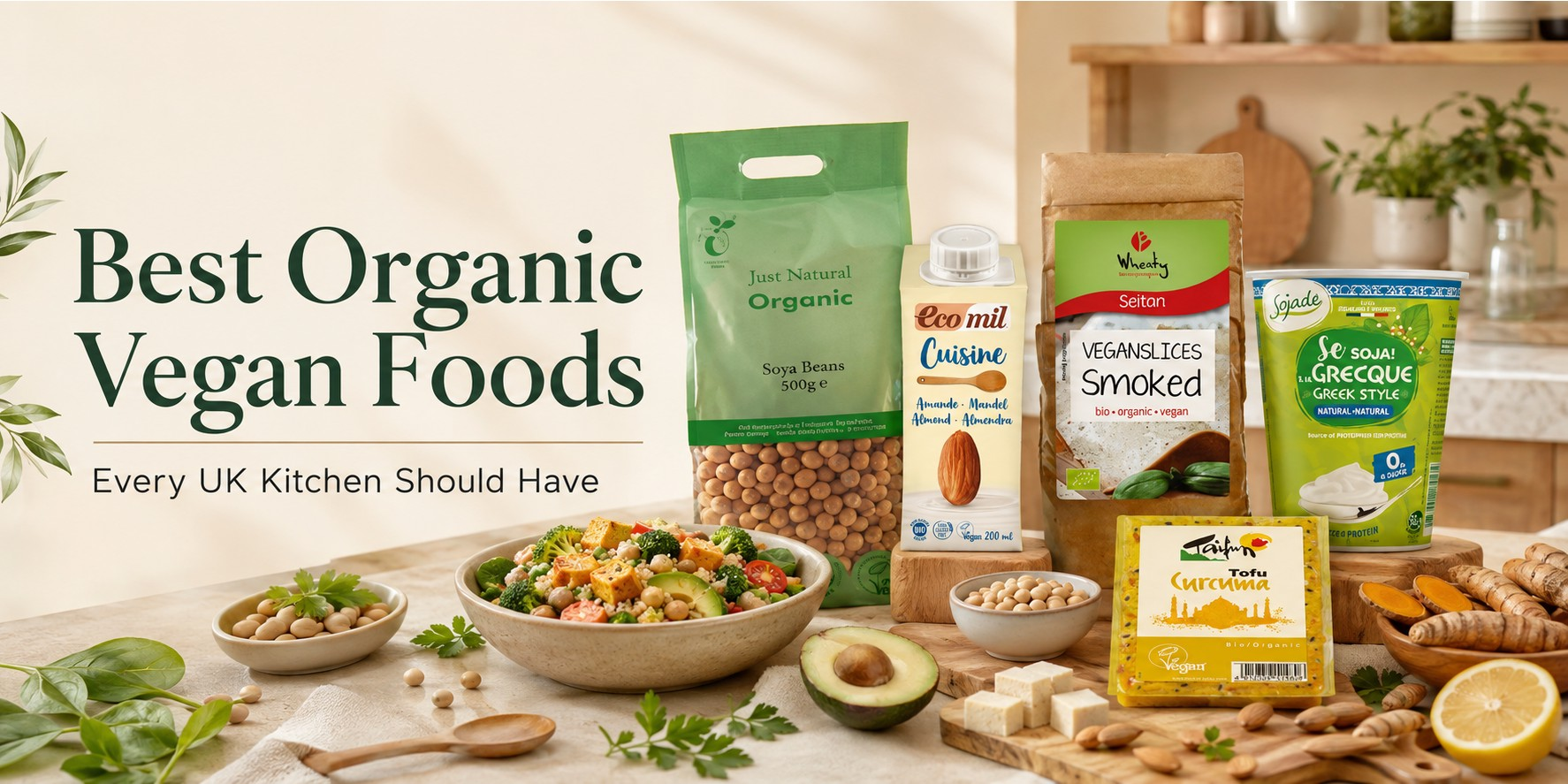
The vegan food shoppers in the UK have access to today looks nothing like it did even five years ago. What used to mean a few tins of chickpeas and a bag of nutritional yeast now stretches across entire aisles — plant-based cheeses, organic snack bars, dairy-free yoghurts, and pantry staples that actually taste like something. The harder part isn't finding vegan food anymore. It's knowing which staples are actually worth keeping stocked. This guide covers the essentials worth building a vegan kitchen around, why organic matters within that choice, and where to source it without piecing your order together from five different websites.
Why More UK Kitchens Are Going Vegan and Organic
Plant-based eating and organic sourcing tend to go hand in hand for a simple reason: both are about being more deliberate over what ends up on the plate.
- Cleaner ingredient lists. Organic vegan foods skip the synthetic pesticides, preservatives, and artificial additives found in many conventional plant-based products.
- Lower environmental footprint. Plant-based eating already reduces impact, and organic farming methods reduce it further.
- Better texture and flavour. Less processed ingredients tend to taste more like what they actually are, rather than a reformulated substitute.
- More transparency. Certified organic vegan food lists exactly what's inside, which matters for anyone managing allergies or sensitivities alongside a plant-based diet.
What Makes a Vegan Product Genuinely Organic?
Not every plant-based product on a UK shelf qualifies as organic plant-based products, even when the packaging leans heavily on green colours and leaf icons. Genuine certification means the crops were grown without synthetic pesticides or fertilisers, and that processing avoided artificial preservatives, flavourings, and colourings. A product can be entirely vegan without being organic, and the reverse is also true — the two labels answer different questions, and it's worth checking both.
Vegan Kitchen Essentials Every UK Pantry Should Stock
A well-stocked vegan kitchen doesn't need to be complicated. A handful of reliable categories cover almost everything.
Pantry Staples
The foundation of any set of vegan pantry essentials is simple: organic grains, pulses, and legumes. Lentils, chickpeas, quinoa, and brown rice form the base of most plant-based meals, and buying them organic avoids the pesticide residue that can concentrate in dried, stored foods over time.
Snacks
Organic vegan snacks have improved dramatically — think dried fruit and nut bars, baked veggie crisps, and dark chocolate made without dairy derivatives. They're worth having on hand specifically because they hold up better than most processed snack aisles once you check the ingredient list.
Proteins
Tofu, tempeh, and organic plant-based protein powders round out the category most people struggle with when they first go vegan. Organic versions tend to be made from non-GMO soy or pea protein, without the processing aids used in cheaper conventional alternatives.
Dairy Alternatives
Plant-based Vegan milks alternatives, yoghurts, and spreads have become genuinely good substitutes rather than compromises. Oat and almond-based options in particular have closed the gap on texture and taste, especially in organic formulations that skip synthetic emulsifiers.
Condiments and Sauces
Tamari, organic tahini, plant-based mayo, and cooking sauces are what actually make a vegan pantry usable on a weeknight. Without them, most plant-based meals default to the same three recipes on repeat.
Healthy Vegan Foods Worth Building Meals Around
Not every vegan product is automatically a health upgrade — plenty of plant-based snack food is still highly processed. Healthy vegan foods tend to share a few traits: whole-food ingredients, minimal processing, and short ingredient lists you can actually read without a food science degree. Leafy greens, whole grains, legumes, nuts, and seeds should make up the bulk of a plant-based kitchen, with processed vegan products filling in the convenience gaps rather than forming the whole diet.
How to Buy Vegan Groceries Online in the UK
Sourcing a full kitchen's worth of vegan groceries from a single supplier is far more practical than assembling it product by product across supermarket aisles that only carry a handful of plant-based options each. A reliable vegan grocery online source saves the weekly hassle of checking three different shops for the one organic oat milk that's actually in stock. An online vegan shop UK shoppers can rely on for a consistent, organic-first range makes it much easier to restock the essentials without compromising on quality every time a supermarket's selection changes.
Zest Organic's vegan food shop brings pantry staples, snacks, proteins, and dairy alternatives together in one place, so you can buy vegan food online without hunting across multiple retailers for the organic versions specifically.
What to Check on the Label
Even within organic and vegan-labelled products, quality varies a lot. A quick label check saves a lot of disappointing purchases:
- Certification mark. A recognised organic certification, not just green packaging or leaf icons.
- Ingredient count. Shorter lists are usually a sign of less processing, particularly in snacks and sauces.
- Added sugar and oil. Organic doesn't mean low in either — worth checking on snack bars and spreads especially.
- Country of origin. Useful context for freshness and food miles, particularly for fresh produce and grains.
A Simple Vegan Pantry Checklist
If you're starting from scratch, this is a reasonable order to build in:
- Grains and pulses. Rice, quinoa, lentils, chickpeas — the base of most meals.
- A protein source. Tofu, tempeh, or a plant-based protein powder you actually like the taste of.
- A plant milk. Oat or almond covers most everyday uses, from coffee to baking.
- Sauces and condiments. Tamari, tahini, and a good vegan mayo make weeknight cooking realistic.
- A few reliable snacks. Something to reach for that isn't ultra-processed when hunger hits between meals.
Frequently Asked Questions
Is organic vegan food more expensive than regular vegan food?
Usually somewhat, yes — organic certification adds cost at the farming and processing stage. Many households manage this by buying organic selectively, prioritising the products eaten most often, like plant milk or pantry staples, over occasional treats.
Can a vegan diet be unhealthy?
Yes, easily, if it leans heavily on processed substitutes rather than whole foods. A plant-based diet built mostly around vegan junk food isn't automatically healthier than a balanced omnivorous one — the quality of the ingredients still matters more than the label.
What's the easiest first swap for someone new to vegan cooking?
Plant milk is usually the simplest starting point, since it drops into coffee, cereal, and baking with almost no adjustment needed, before moving on to proteins and pantry staples.
Final Thoughts
Stocking a genuinely useful vegan kitchen comes down to a handful of reliable categories, done well, rather than an overwhelming list of specialty products. Once the essentials are in place — grains, proteins, plant milk, condiments, and a few good snacks — the rest of plant-based cooking gets a lot easier. At Zest Organic, we make it simple to find quality organic staples for a well-stocked vegan kitchen, so those essentials are as clean as the diet is meant to be.