


How to Choose Eco-Friendly Cleaning Products That Actually Work
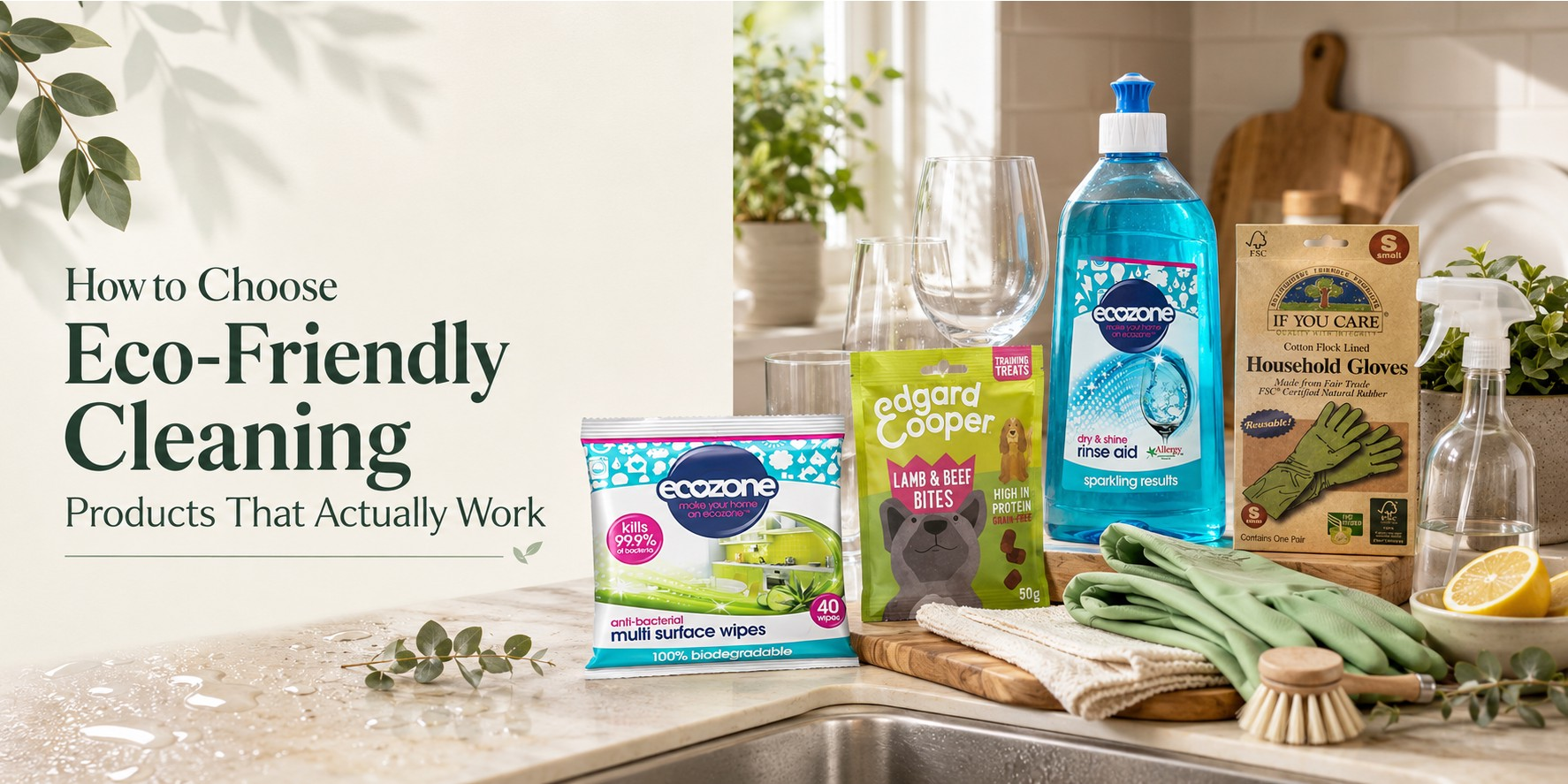
Most people who switch to eco-friendly cleaning products have the same quiet worry: will this actually get my kitchen counter clean, or will I just end up wiping it down again with the old spray? It's a fair question. The natural cleaning aisle has grown fast, and not every bottle labeled "green" or "natural" lives up to it. Some are genuinely well-formulated. Others are mostly marketing. Knowing the difference is what actually determines whether your switch to a healthier home sticks, or quietly reverses after one disappointing clean.
This guide walks through what makes a cleaner genuinely eco-friendly, how to tell effective formulas from good packaging, and how to choose the right product for every room in the house.
Why People Are Switching to Natural Cleaning Products
The shift away from conventional cleaners isn't just a trend — it's a response to what's actually in the bottle. Many mainstream sprays and detergents rely on synthetic fragrances, harsh solvents, and chemicals that linger on surfaces long after the counter looks clean.
- Fewer harsh fumes. Non toxic cleaning products don't leave that sharp, chemical smell hanging in the air after you clean.
- Safer around kids and pets. Floors and counters get touched, licked, and crawled on — what's left behind matters.
- Lower environmental impact. Sustainable cleaning products break down more easily and don't send harsh synthetic runoff into waterways.
- Better for sensitive skin. Plant-based cleaning products are far less likely to trigger irritation on hands during everyday cleaning.
What Actually Makes a Cleaner "Eco-Friendly"?
The word "natural" isn't regulated, which is exactly why so many shoppers get burned by it. A genuinely chemical-free cleaning products is built from plant-derived surfactants, essential oils, and biodegradable ingredients — not just a synthetic formula with a leaf on the label. True organic cleaning products list every ingredient clearly, avoid petroleum-based solvents, and skip the artificial dyes and synthetic fragrances that conventional cleaners lean on for that "just cleaned" smell.
A simple rule of thumb: if a brand won't tell you what's in the bottle, that's the answer. Transparent ingredient lists are one of the clearest signs you're looking at a serious formula, not a marketing exercise.
Do Natural Cleaners Actually Work as Well as Chemical Ones?
This is the real question behind most hesitation, and the honest answer is: it depends on the formula, not the category. Early-generation organic household cleaners earned a reputation for being weak on grease and grime, and some still are. But well-formulated natural household cleaners now use plant enzymes and concentrated plant oils that cut through grease and soap scum just as effectively as their chemical counterparts — they just do it without the synthetic aftertaste left on your surfaces.
The difference usually comes down to concentration and formulation quality, not whether the product is natural. A well-made plant-based cleaner, used correctly, holds up against daily kitchen and bathroom messes without needing to fall back on harsh chemistry.
How to Choose the Best Eco-Friendly Cleaning Products for Every Room
Not every space in your home needs the same formula. Matching the product to the job makes a noticeable difference in results.
Kitchen
Eco-friendly kitchen cleaning products need to cut through grease, food residue, and countertop bacteria without leaving behind a chemical film near where you prepare food. Look for a citrus- or vinegar-based degreaser that's tough on stovetops but still safe for cutting boards and food-contact surfaces.
Bathroom
Bathrooms need something stronger against soap scum, mildew, and hard water buildup. The best eco-friendly bathroom cleaning products combine plant-based acids, like citric acid, with antibacterial essential oils such as tea tree or eucalyptus for a formula that actually cuts through grime in the shower and around the sink.
Dishes
Eco-friendly dishwashing products should cut grease without stripping your hands raw after the third sink load of the day. Plant-based surfactants create a solid lather and rinse clean, without the synthetic fragrance that lingers on "clean" dishes.
Everyday Surfaces
For counters, tables, and glass, eco-friendly surface cleaners built on alcohol or vinegar bases evaporate quickly and leave a streak-free finish, without the harsh ammonia smell found in a lot of conventional glass and multi-surface sprays.
Homes With Pets
Pet-safe cleaning products matter more than most people realize — pets walk across cleaned floors barefoot and lick their paws afterward. Look for formulas free of phenols and chlorine bleach, both of which are genuinely toxic to cats and dogs even in small residual amounts.
What to Look for When Shopping for Eco Household Cleaning Products
With so many options on the shelf, a quick checklist makes it much easier to separate the genuinely effective products from the ones riding on good branding.
- Full ingredient transparency. A brand confident in its formula lists every ingredient, not just a vague "plant-derived" claim.
- Real certifications. Look for recognized third-party labels rather than a brand's own self-designed "eco" badge.
- Concentrated formulas. Products that require dilution often clean just as well while producing less plastic waste per use.
- Recyclable or refillable packaging. A genuinely sustainable cleaning products brand thinks about the bottle, not just what's inside it.
- No vague fragrance claims. "Fragrance" alone on a label can hide dozens of undisclosed synthetic chemicals.
Running a product through this checklist is usually enough to tell whether you're looking at one of the best eco-friendly cleaning products on the market, or just a bottle that leans on the word "natural" without earning it.
Building an Eco-Friendly Cleaning Routine for Your Home
Switching every product at once isn't necessary, and it's usually where people give up. A more sustainable approach is to replace one category at a time — start with whatever you use most, like an all-purpose surface spray or dish soap, and build outward from there. Within a few months, most households end up with a full rotation of eco-friendly cleaning products for home that outperforms what they started with, simply because each swap was chosen deliberately instead of grabbed off a shelf.
The goal isn't perfection on day one. It's building a routine where every product in your cabinet is doing its job well, without leaving behind anything you'd rather not have on your counters, your hands, or your floors.
Final Thoughts
Choosing eco-friendly cleaning doesn't mean settling for a weaker clean — it means being more deliberate about what goes into the formula and matching the right product to the right job. At Zest Organic, we make it easier to choose effective, natural cleaning products that support a more sustainable home. Once you know what to look for, telling a genuinely effective natural cleaner apart from an average one gets a lot easier, and the switch stops feeling like a compromise.